WatchGuard Spray Foam — Material, Equipment Guidance & Applicator Support
For the crew that owns the rig, or is about to. WatchGuard Spray Foam supplies closed-cell, open-cell, and roofing-grade polyurethane foam under private label — plus the equipment guidance, yield math, and job support that decide whether a spray foam business makes money or just makes noise.
Talk to Us About Your RigWhat Applicators Get Here That They Do Not Get From a Catalog
Straight Talk About Yield
Board-foot yield on a data sheet is a theoretical number produced under laboratory conditions. What you get on a jobsite depends on temperature, pass thickness, overspray, and how much foam ends up on the floor. We will talk to you about real yield, because guessing wrong is how a bid loses money.
Rig Sizing Before You Buy
The most expensive mistake in this business is buying the wrong proportioner. Undersize it and you cannot keep up on a big job; oversize it and you are hauling and powering capacity you never use. Tell us the work you intend to chase and we will help you size it honestly.
Your Name on the Drums
When a homeowner gets three foam quotes, the material brand is one of the few things they can compare — and every national brand is priceable online in thirty seconds. Private-labeled foam takes you out of that comparison entirely.
Foam and Coating on the Same Truck
Once you own a proportioner, roofing foam and polyurea membrane are the same equipment and the same crew day. Foam-and-coat roofing is the highest-value thing a rig can do, and most insulation contractors are not doing it yet.
The Jobs a Foam Rig Pays For
Where the work actually is, in roughly the order most contractors find it.
- Metal buildings & pole barns
- Crawl spaces & rim joists
- New residential construction
- Unvented attics & rooflines
- Shops, garages & outbuildings
- Ag storage & livestock barns
- Cold storage & coolers
- Foam roofing over low-slope decks
- Retrofit & remodel insulation
- Commercial & light industrial
What It Takes to Run Foam
The equipment and practices behind a rig that actually produces.
The Number That Decides Whether You Made Money
Spray foam is sold by the board foot — one square foot at one inch thick. Everything in the business runs off that unit, and almost every contractor who loses money on a job lost it in the yield math rather than in the bidding.
A set of material has a theoretical yield printed on the data sheet. That figure comes from a controlled environment with material at the correct temperature, correct pass thickness, and no waste. On a real jobsite you are fighting cold drums, a cold substrate, irregular framing, overspray, trimmed open-cell landing on the floor, and the passes at the end of a run where the operator is tired.
Real-world yield is always below the theoretical number. How far below is the single most important thing an estimator in this business needs to know about their own crew, and it is something you can only learn by measuring — how many board feet a set actually produced, job after job, in your conditions.
We will talk about that honestly. A supplier who quotes only the data sheet number is helping you bid jobs you will lose money on, and eventually you stop buying from them anyway.
What Drives Your Cost Per Board Foot
Where New Foam Contractors Actually Go Wrong
After enough conversations with crews who bought a rig and struggled, the pattern is consistent. It is almost never the chemistry.
They bought the wrong machine. Usually undersized, because the price was attractive and the salesperson did not ask what buildings they intended to spray. A machine that cannot keep up turns a one-day job into two and destroys the margin the bid assumed.
They underestimated power and logistics. A proportioner needs real power and warm material. A trailer that cannot keep drums warm overnight in January means the first two hours of every winter morning are spent waiting instead of spraying.
They bid off data-sheet yield. See above. This one shows up as a business that is busy and unprofitable, which is the hardest problem to diagnose from the inside.
They did not price the safety program in. Supplied air, PPE, site control, and re-occupancy time are real costs. Crews that skip them are taking a risk with their own health and their insurability, and crews that pay for them and forgot to bid them are eating the cost.
They stayed in one market. A rig that only does residential cavity fill is idle whenever housing slows. Ag buildings, crawl spaces, and foam roofing use the same equipment and run on different cycles.
Crews at Work
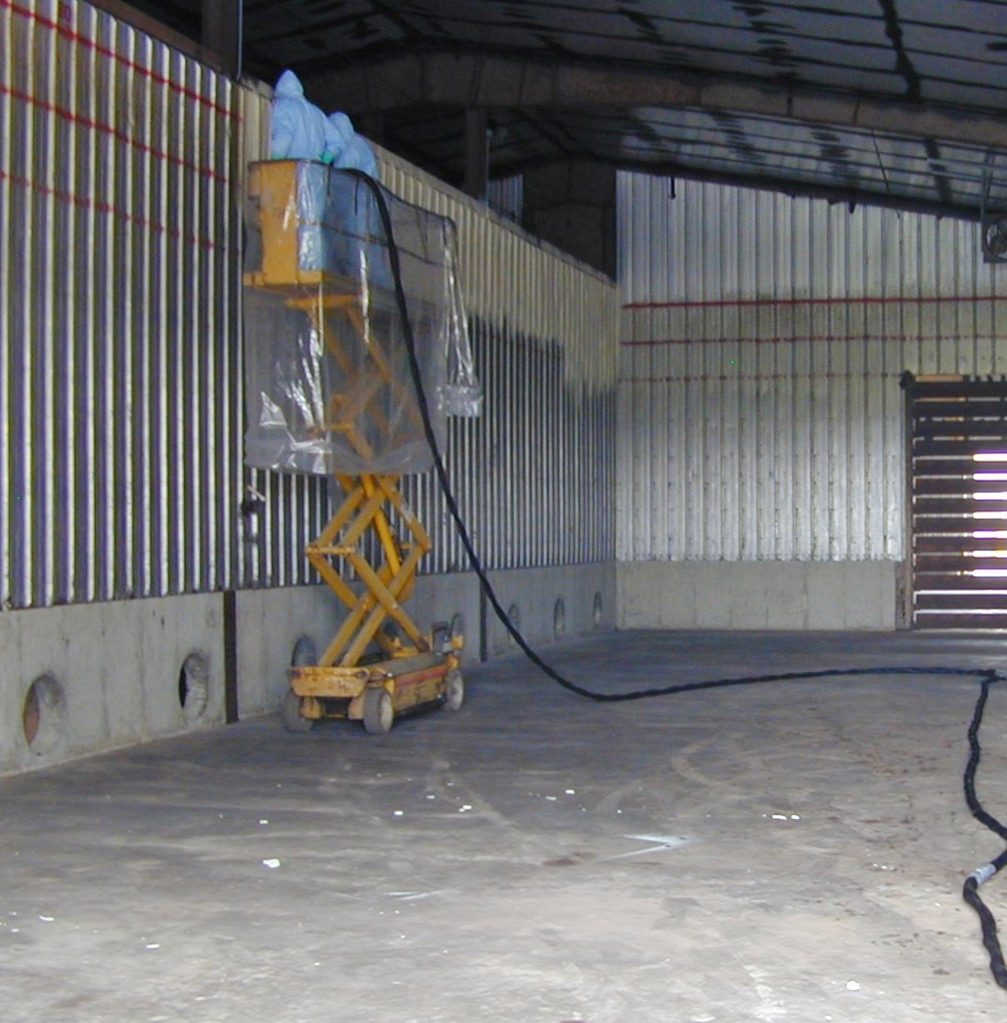
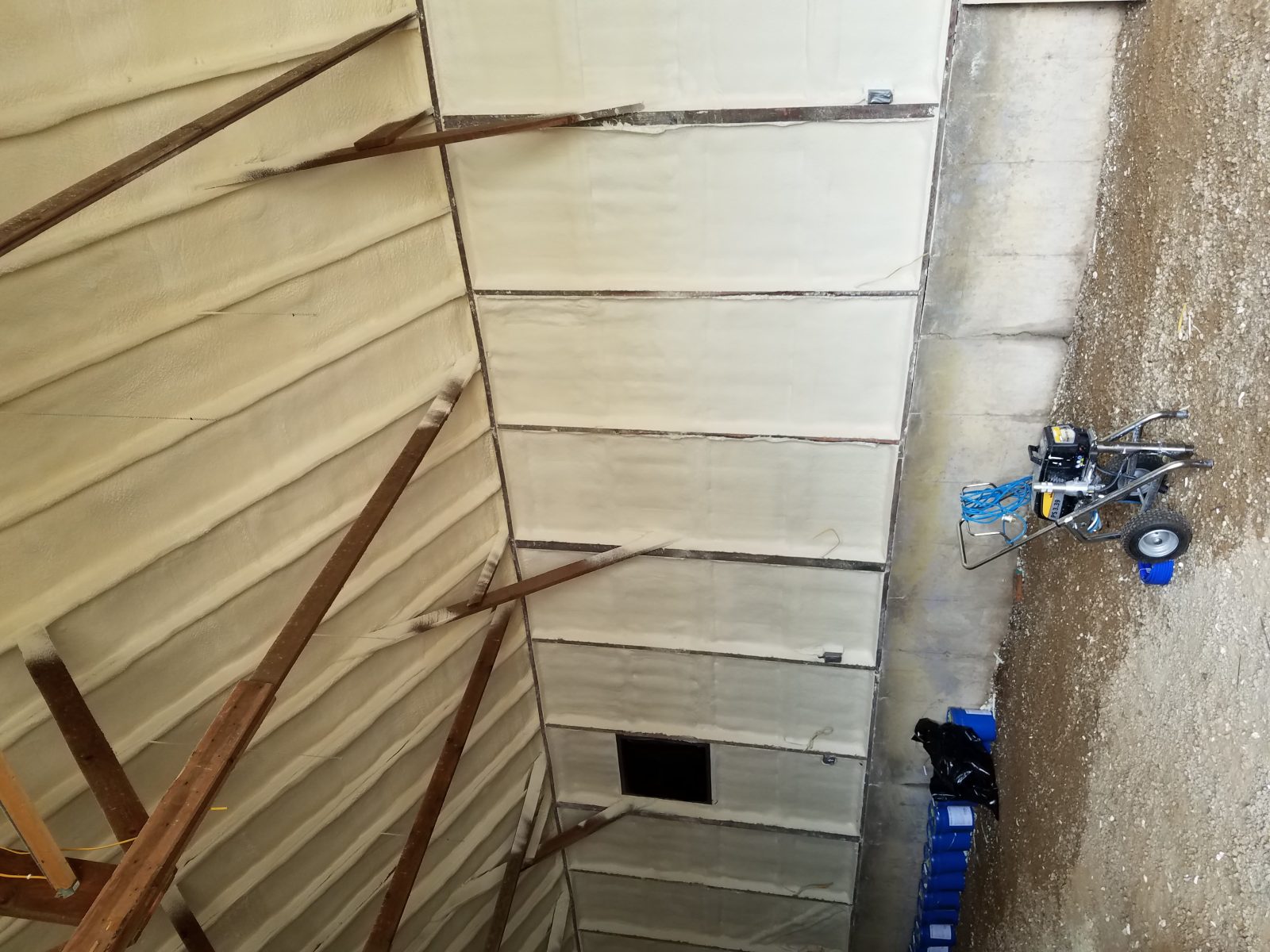
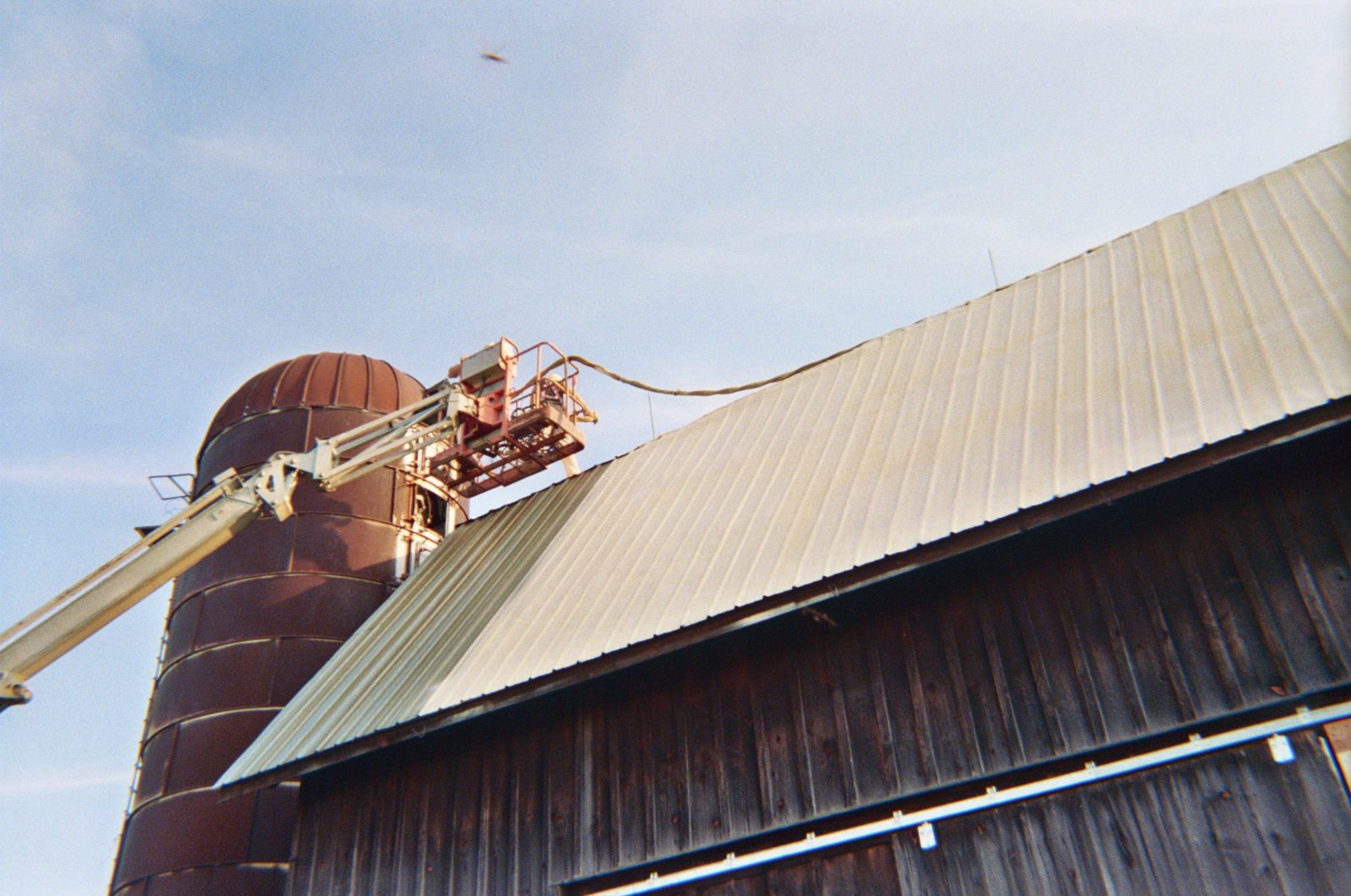
Running a Rig, or Buying One?
Either way, tell us what work you take on and what equipment you have or are considering. We will give you honest guidance before we quote you a drum of anything.
Talk to an ApplicatorTalk to Us About Your Rig
Tell us about your project and we will follow up with product details, technical data sheets, and pricing.
Frequently Asked Questions
Frequently Asked Questions
The questions we get from crews, and from people about to become one.
Equipment & Getting Started
What size proportioner should I buy?
Size it for the work you intend to chase in eighteen months, not the work you have today. E-20 class machines suit smaller crews on residential and light commercial work where site power is often limited. E-30 class and up handle commercial, agricultural, and roofing volume but draw substantially more power. Tell us the buildings you want to be spraying and we will give you an honest recommendation, including when a smaller machine is the right call.
What does it actually take to get started beyond the machine?
An enclosed trailer or box truck with heat and drum storage, a properly sized generator, transfer pumps, a heated hose, an air compressor, a spray gun, supplied-air respiratory protection for every sprayer, full PPE, a real spare parts kit, and working capital for material. Underestimating everything past the machine is the most common startup mistake.
How long does it take to learn to spray well?
Basic competence comes reasonably quickly; consistency across conditions takes a season. The variables that matter are material temperature, ratio, substrate temperature, and pass thickness, and you learn to read them by doing it. Do not schedule your most demanding job first, and call us when something looks wrong rather than spraying through it.
Do I need certification or special licensing?
Requirements vary by state and jurisdiction, and building code requirements around thermal and ignition barriers apply to your work regardless of licensing. Separately, confirm with your insurance carrier that your policy contemplates spray foam application — not every general liability policy does, and that is a bad thing to discover after a claim.
Yield, Bidding & Economics
How do I calculate material for a job?
Board feet — square feet multiplied by inches of thickness. A 1,000 sq ft wall at 3" is 3,000 board feet. Then divide by your actual yield per set, which is lower than the data sheet figure and specific to your equipment, your climate, and your crew. Track board feet produced per set on every job for a season and bid from that number.
Why is my real yield below the data sheet number?
Because the data sheet figure comes from controlled conditions. On a jobsite you lose yield to cold material, cold substrates, overspray, irregular framing, trim waste on open-cell, and passes at the end of a run. This is normal and expected — the mistake is bidding as though it were not.
Is open-cell or closed-cell more profitable?
Neither, inherently — it depends on the job. Open-cell yields far more board feet per set but you spray more inches and trim waste onto the floor. Closed-cell yields fewer board feet but delivers more R-value per inch so you spray less. Compare installed cost per square foot at the R-value the job requires, not price per set.
What jobs should a new contractor chase first?
Metal buildings, pole barns, shops, and crawl spaces. They are straightforward, the customer already understands the problem, access is usually good, and they do not require you to be one trade in a builder's critical path while you are still learning your machine. Save unvented roof assemblies and foam roofing for after you have a season behind you.
Troubleshooting & Supply
My foam is not rising properly. What do I check?
Temperature first — material temperature at the drums, hose temperature, and substrate temperature, in that order. Cold anything is the most common cause. Then ratio: check pressures on both sides for imbalance. Then the gun: a partially blocked mix chamber produces off-ratio material that looks fine coming out and performs badly. Call us while you are still on the job, not after.
Can foam be sprayed too thick?
Yes, and it is a real failure mode. Closed-cell generates exotherm heat as it cures; too much in one pass traps that heat, degrades the cell structure, and in extreme cases scorches or chars the interior of the pour. Follow the lift thickness on the data sheet even when the schedule is tight — this is one of the few shortcuts in the trade that ruins a whole job.
Do you private label the foam for applicators?
Yes. Every grade is available under your own brand with technical data sheets and safety data sheets included. Volume tiers are set so a single-rig operation can participate. It is one of the highest-leverage changes a small foam contractor can make to how they sell.
Can I get coatings from you too?
Yes, and you should look at it seriously. Oak Ridge manufactures polyurea coatings and roof membranes alongside the foam, and your proportioner will spray them. Foam-and-coat roofing with OR-80SLM Silver Lining Membrane is the highest-value work a foam rig can do, and it runs on a different seasonal cycle than residential insulation.
Something Not Going Right on a Job?
Call or write. Somebody who has run a rig will work through it with you.
Ask a Question